Matterless Matters

There are some questions that sound pointless, but aren’t. If we ask why zombies need to eat, we end up exploring the concept of death; if we ask whether mermaids are mammals or fish, we delve into the definition of a species and how we categorize the world around us. In the Matterless Matters talks, the answers don’t matter very much – but the questions, surprisingly, do.  
 Are Mermaids Fish or Mammals?

yellow-colorful-horizontal-abstract-art-burning-jellyfish-by-kredart-serg-wiaderny.jpg

All sorts of questions come up once you start asking. Is a mermaid a fish or a mammal? Well, that depends on whether they lay eggs or give birth to live young. But wait, sharks are live-born and platypuses lay eggs, so that can’t be the whole story. What exactly is a mammal, anyway? What about fish? Do mermaids care for their young? And what about…

People don’t always expect to be asked about mermaids. But it’s a very important matter, so it’s not surprising that most have an opinion on it.


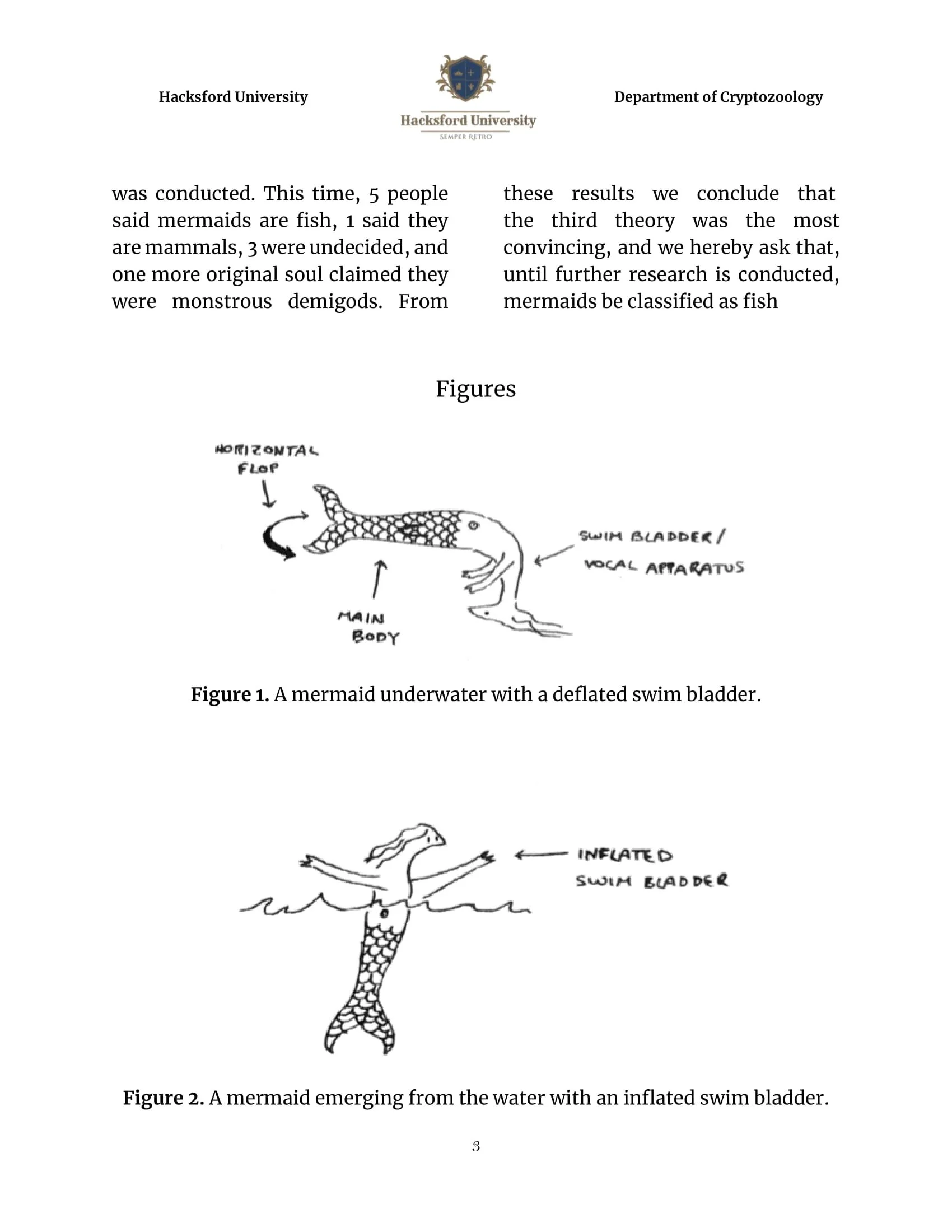
The first Matterless Matters conference summarized by the brilliant Dr. Sylvia Gilbertson


Listen to the Podcast

With a question this interesting, we couldn’t just stop at a discussion and a paper — naturally a podcast was needed as well. Joining us are distinguished guests Dr. Chris Buddle from McGill University, Dr. Sylvia Gilbertson from Hacksford University, and Mermaid Claudia.

Why Do Zombies Need To Eat?

wallpaperbetter.jpg
 

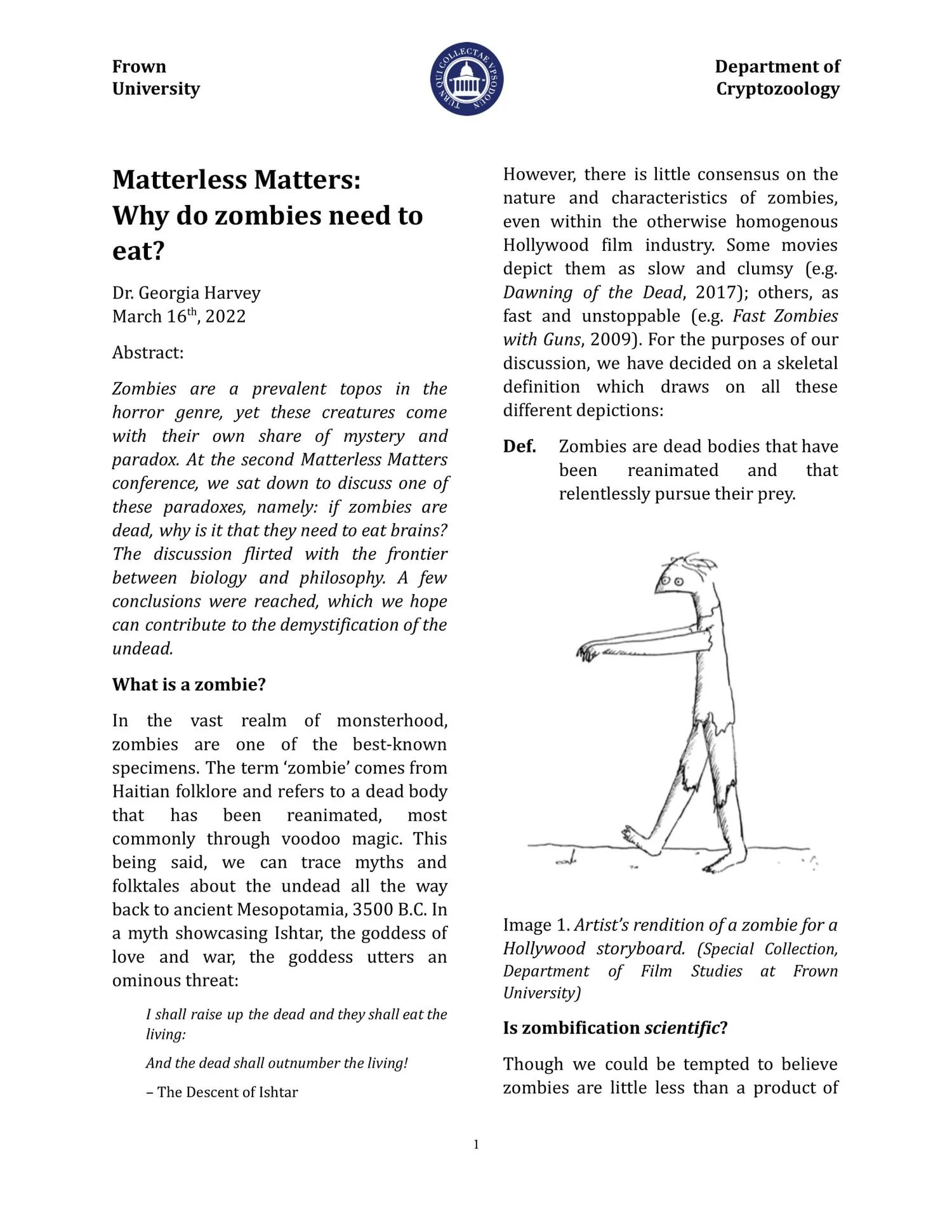
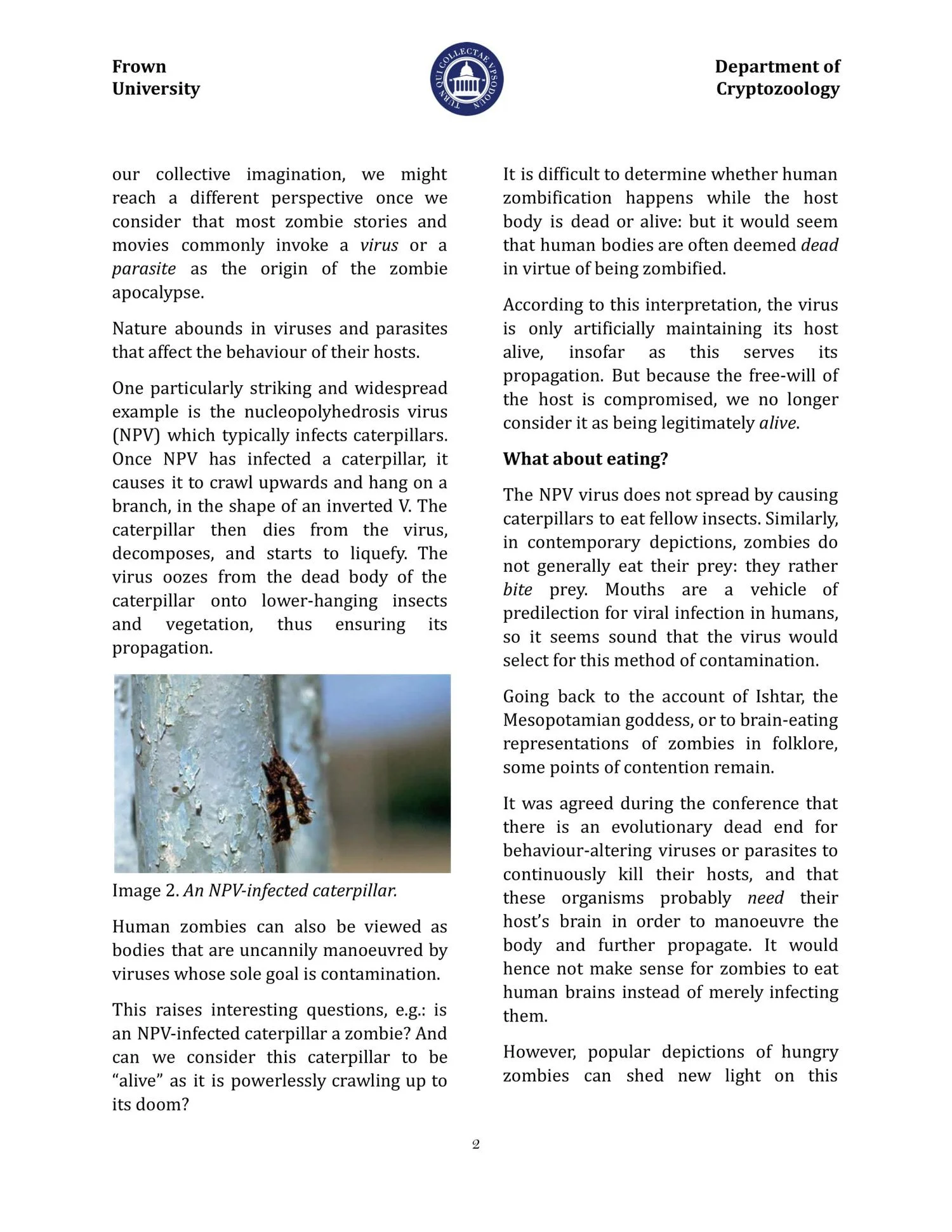
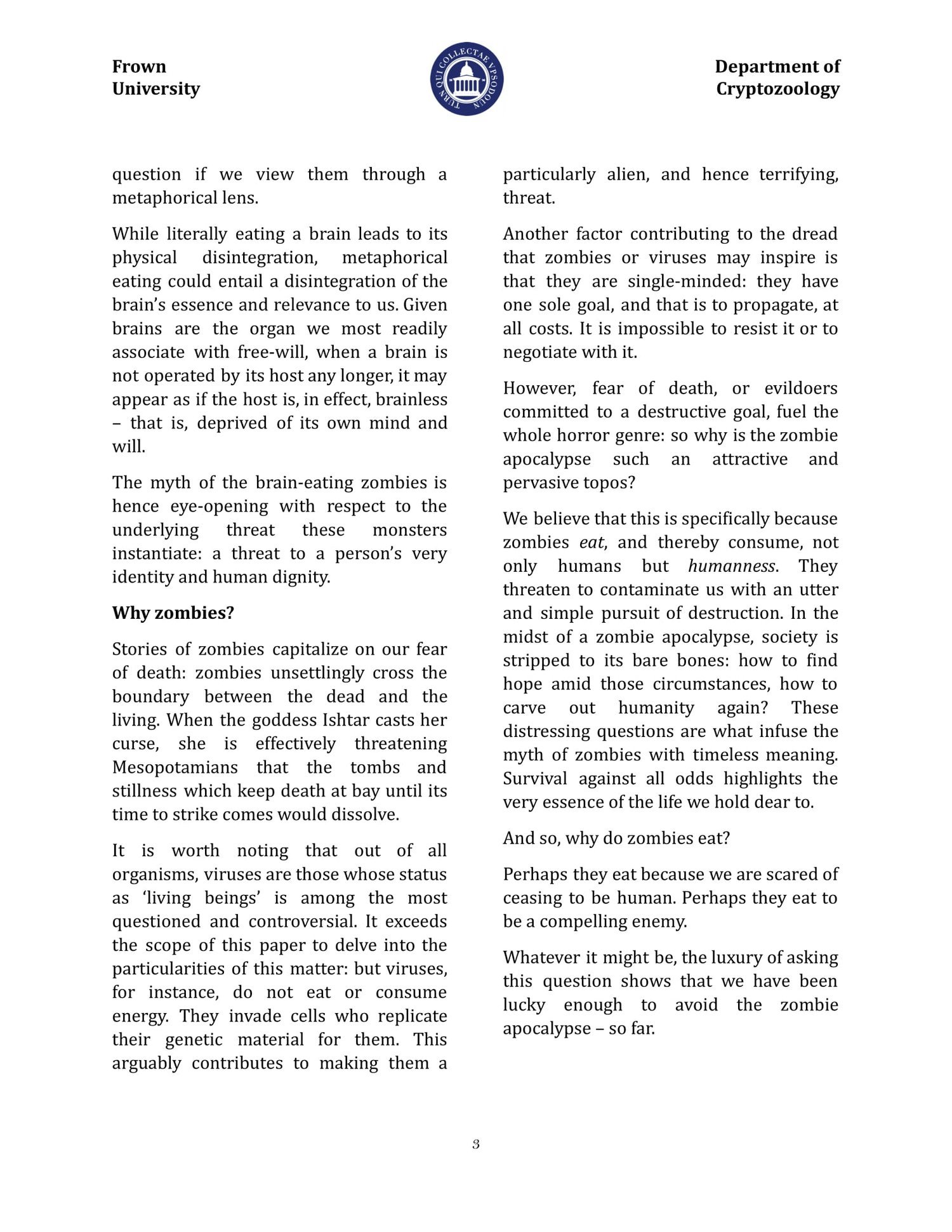
In an age where the threat of a zombie apocalypse darkens every book, movie, and TV show, it is important we start studying this terrifying enemy. The most serious threat they pose, of course, is that of eating our brains. But why do zombies need to eat brains, if they are dead and don’t need energy?


Frown university: department of cryptozoology


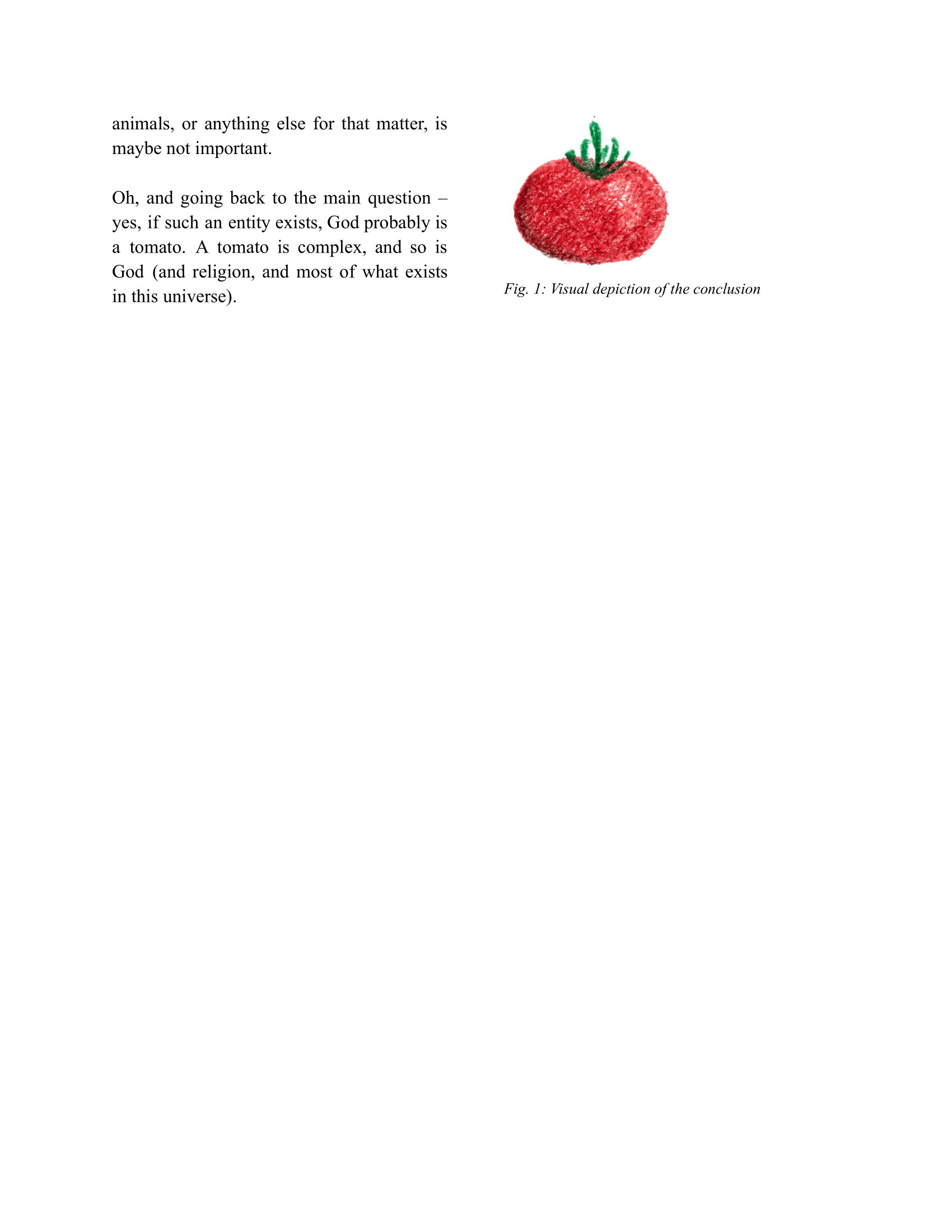
 Is God a Tomato?

Gods.png
 

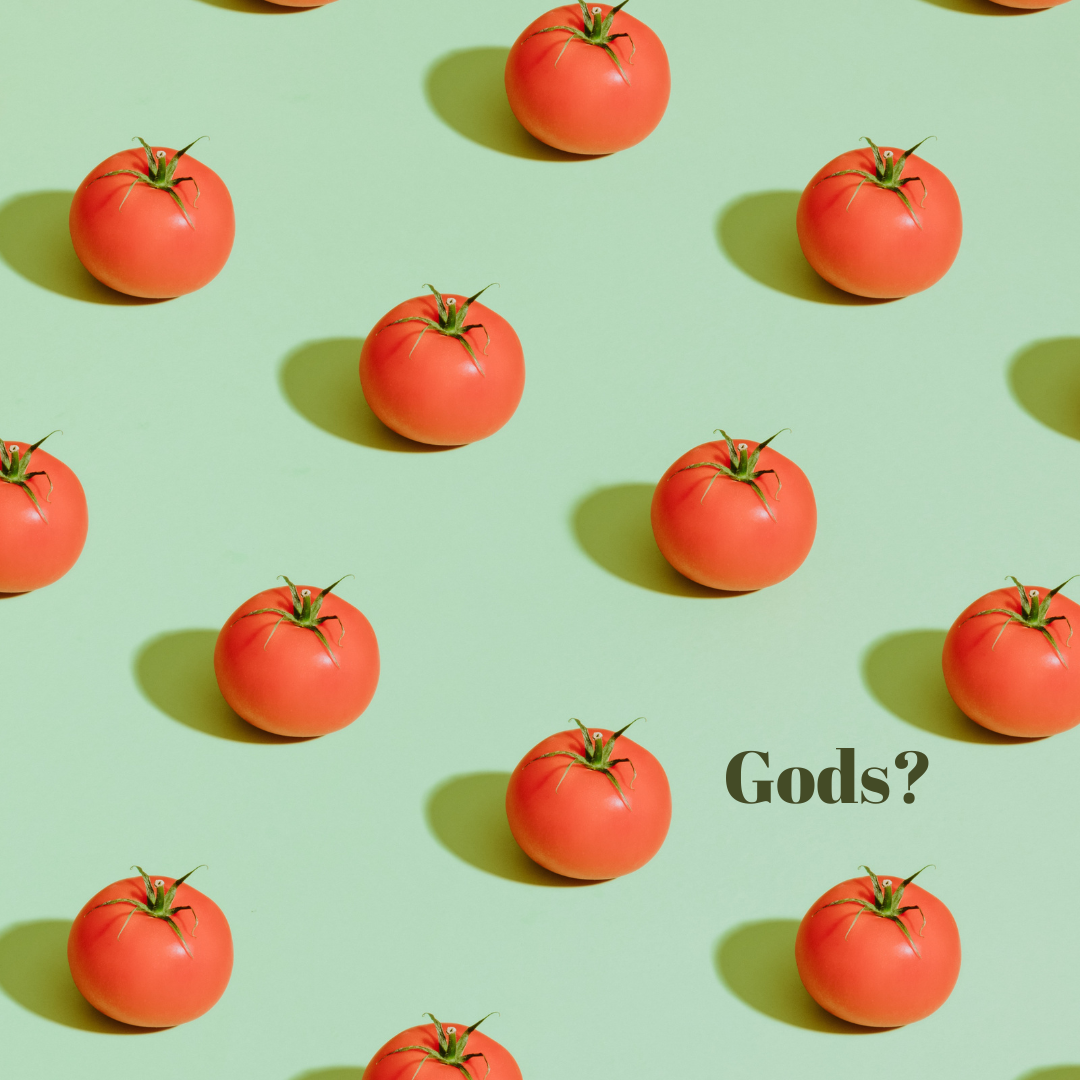
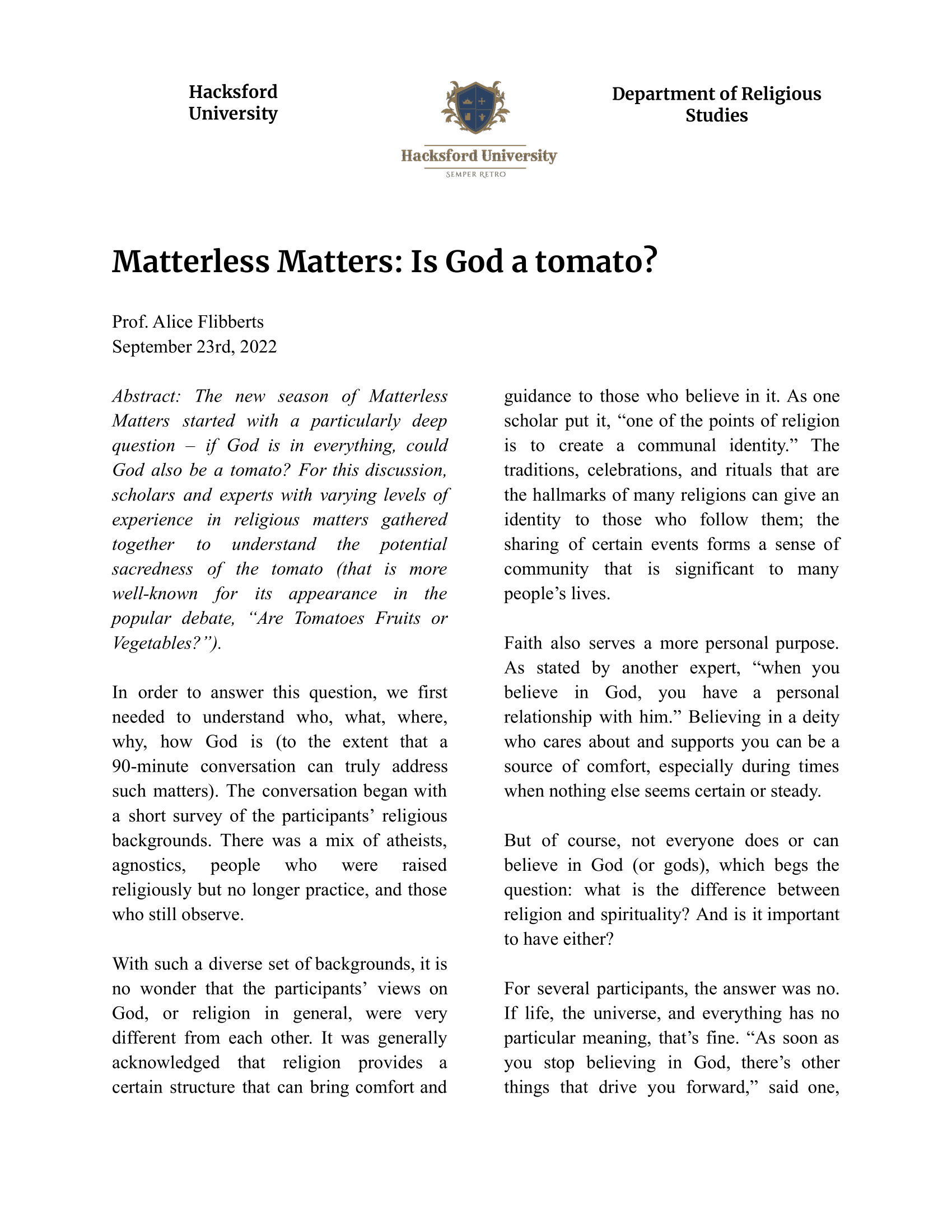
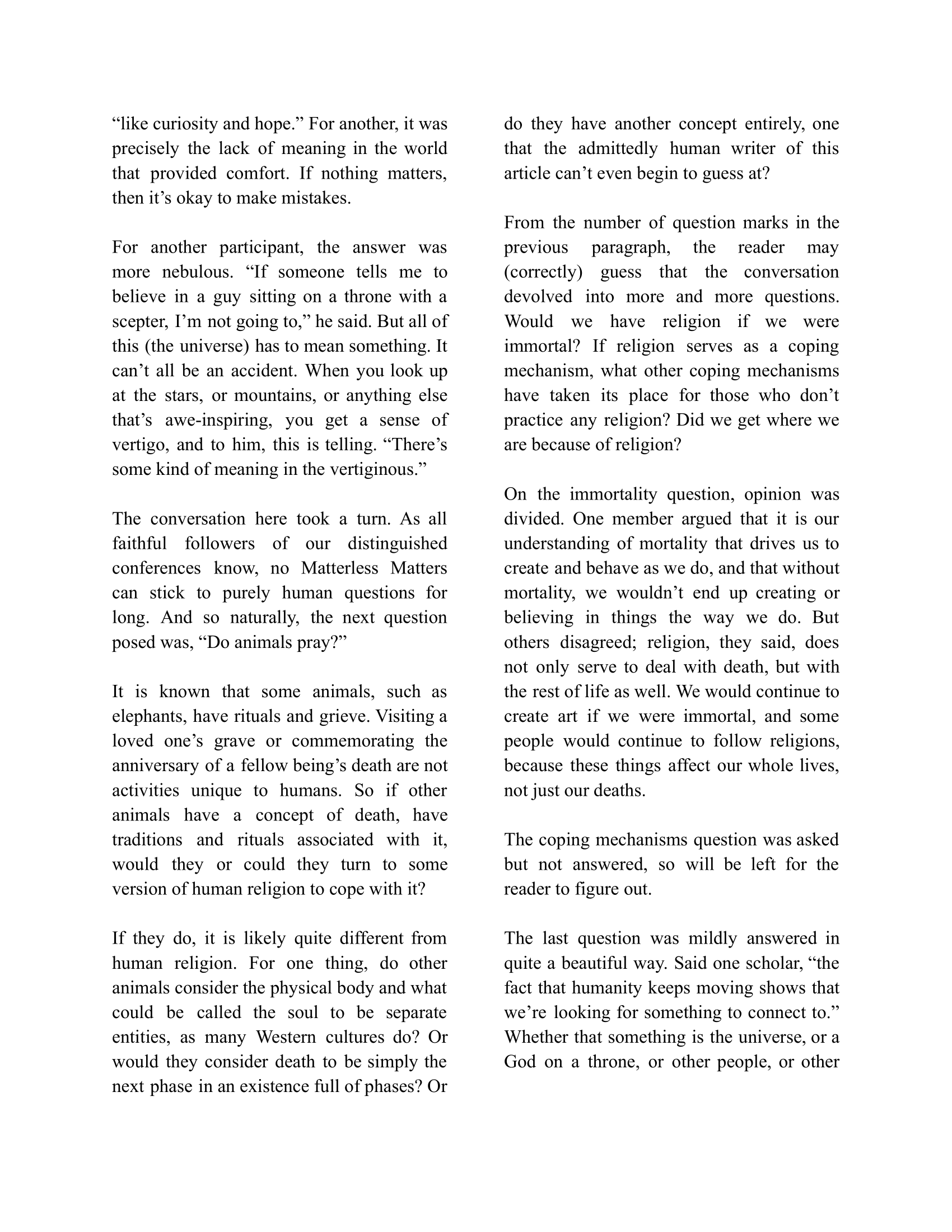
Does God exist? If so, where? If God is in everything, can God be found in a tomato? Scholars at B21 discuss their views on religion, spirituality, and the presence of the divine.


from Hacksford University, department of religious studies


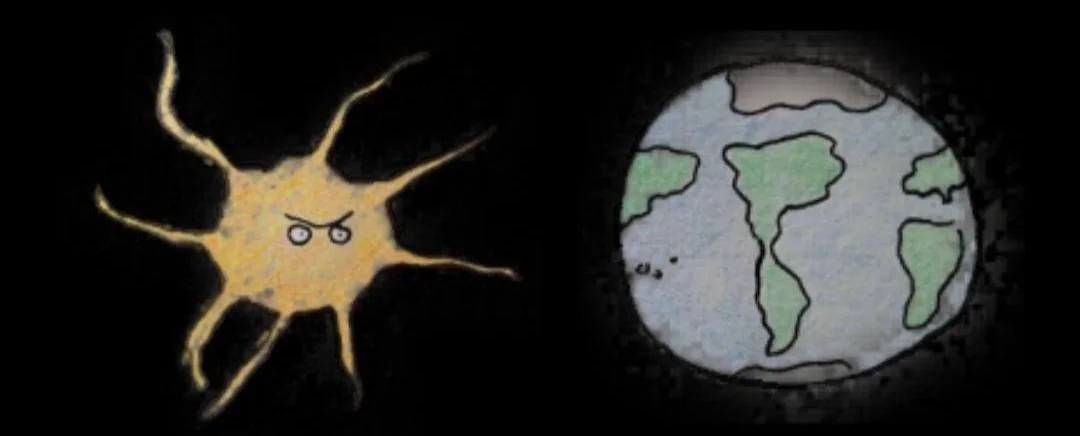
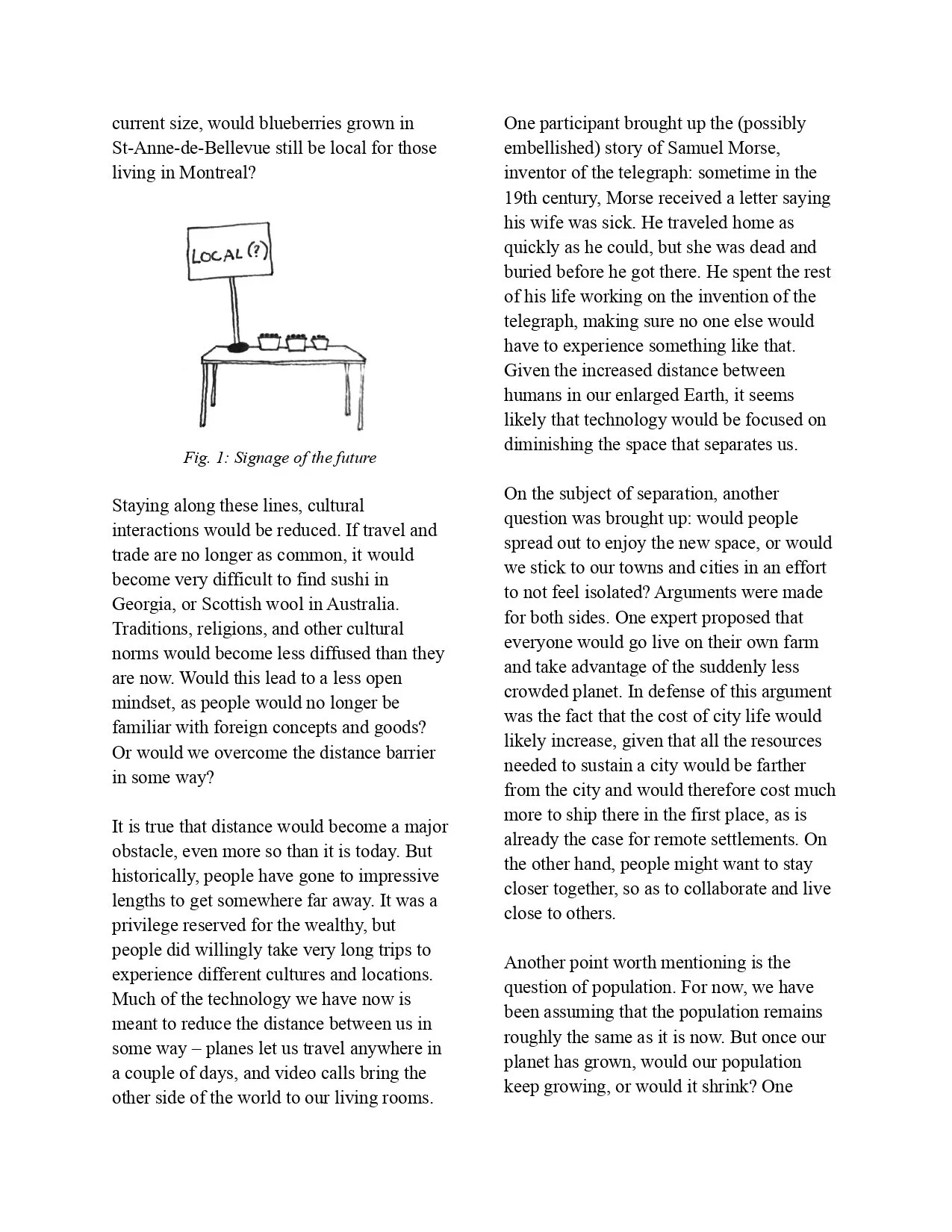
What if the Earth Was as Big as the Sun?

315150862_621002606383952_3495733449243936213_n.jpg

 If the Earth was as big as the sun — 109 times bigger than it currently is — what would change? What would “local” mean? Would we still travel? How would the population change, or our relationship to the natural world? Keep reading to learn about the expert opinions and controversies on this pressing topic.

from hacksford university, department of earth and atmospheric sciences


Superpowers2 (1).jpg

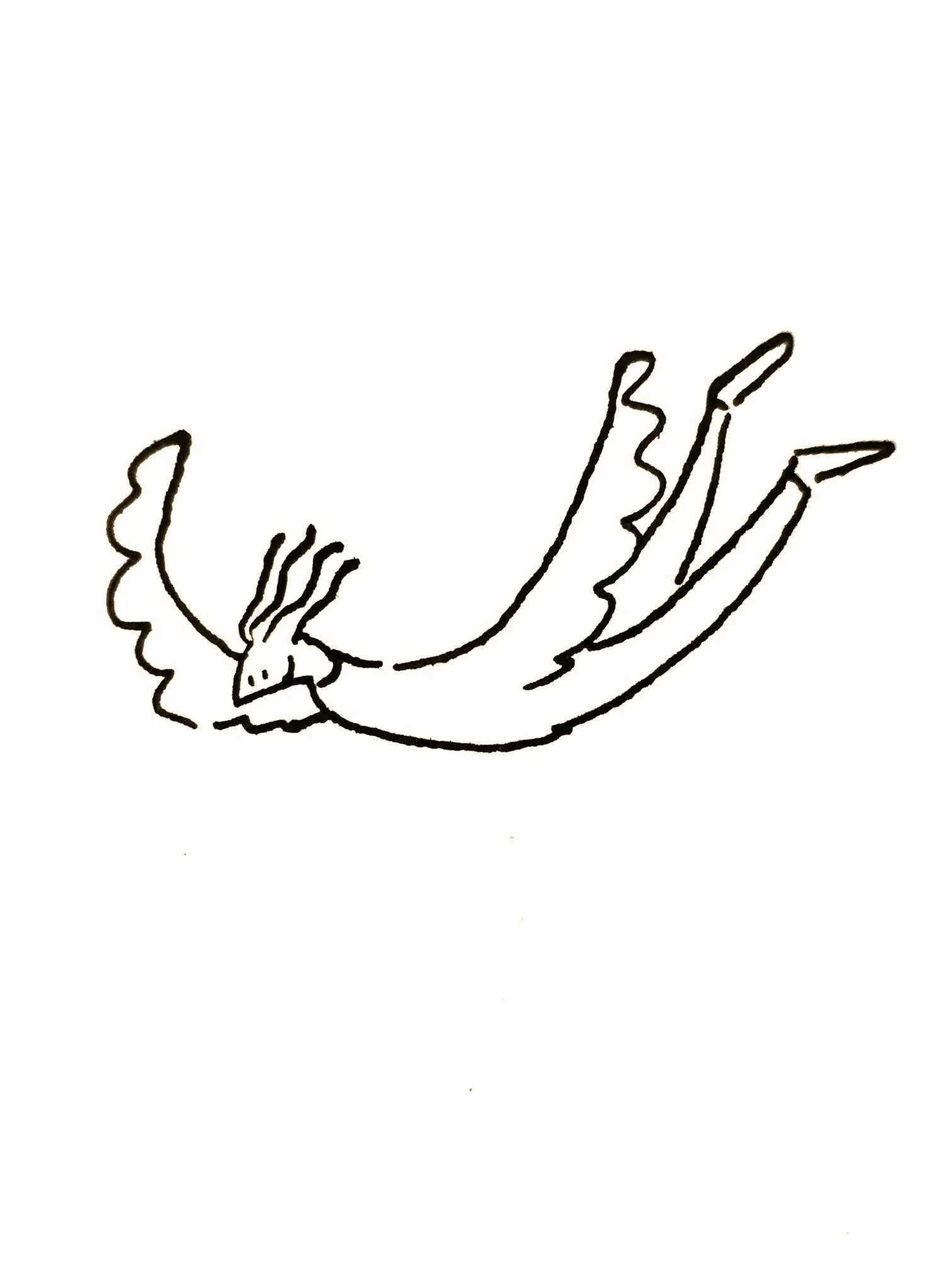
How would superpowers work?


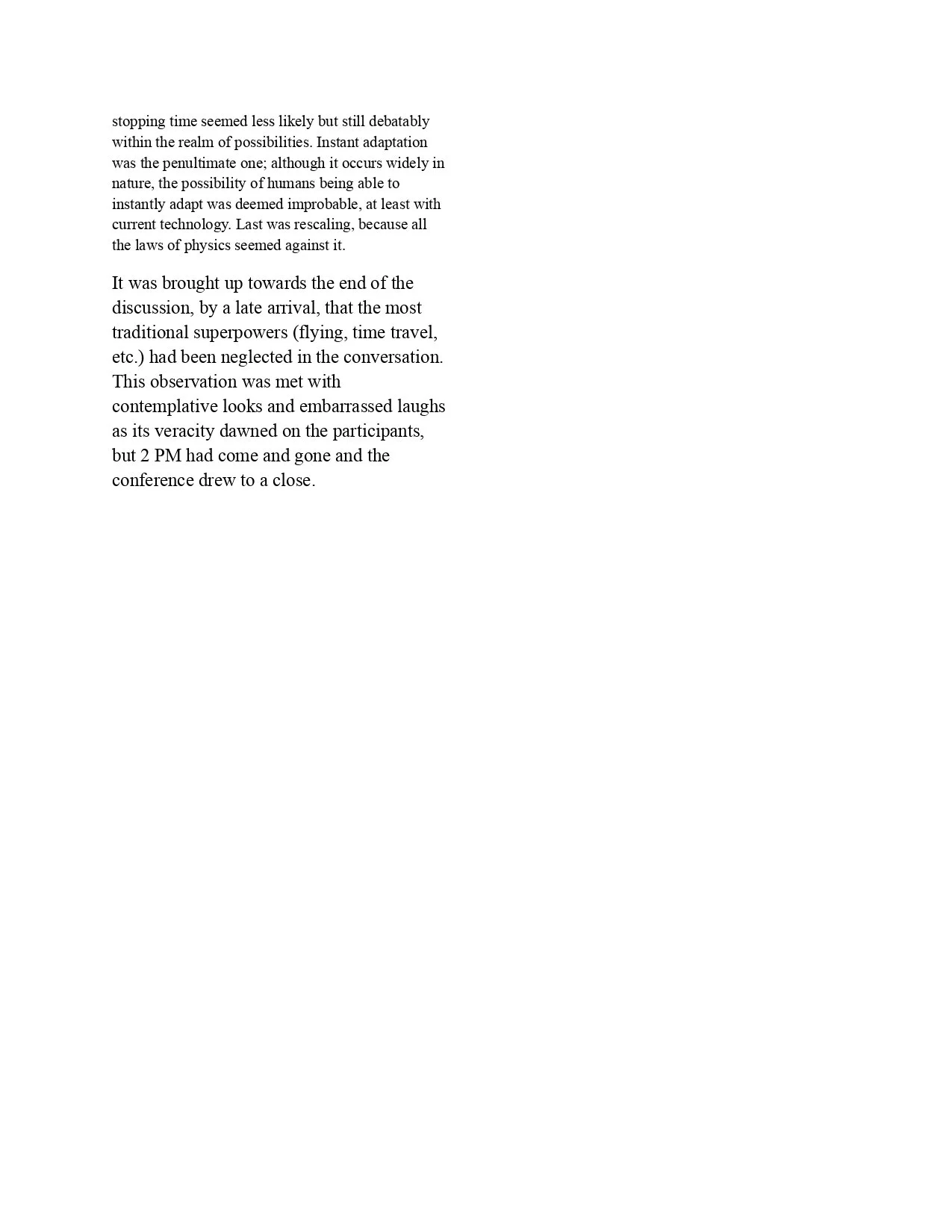
Let’s assume superpowers existed, or at least could exist. What mechanisms would allow this? Could humans develop some kind of system to time travel? Or fly? Or shapeshift? Researchers at the esteemed Hacksford University collaborated with the B21 community to discuss this further.

from hacksford university, department of biology


 Where do lost socks go?

10.png

Almost everyone has lost at least one sock at some point in their life.

Where do they go?

It’s a question people have been asking themselves since the first sock was lost.

Here are some of the B21 community’s hypotheses:

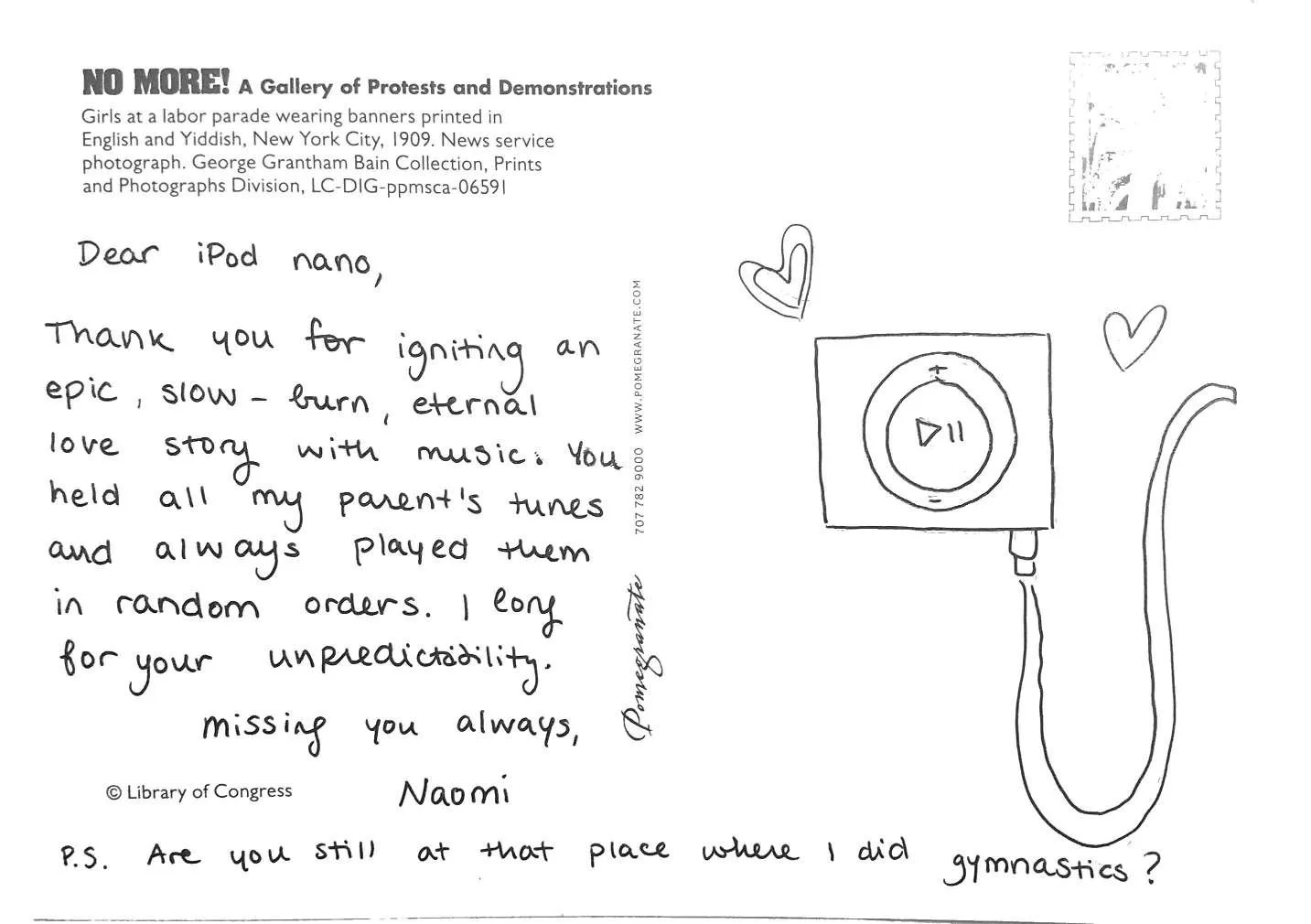
But socks aren’t the only things we lose. Hats, gloves, glasses, phones, keys… And then, of course, there are the others we lose, people, opportunities, ourselves…

Depending on what it is we’ve lost, we can move on more or less easily. But sometimes, it would be nice to hear from the socks and the glasses, the sweaters and the selves, that we’ve lost contact with.

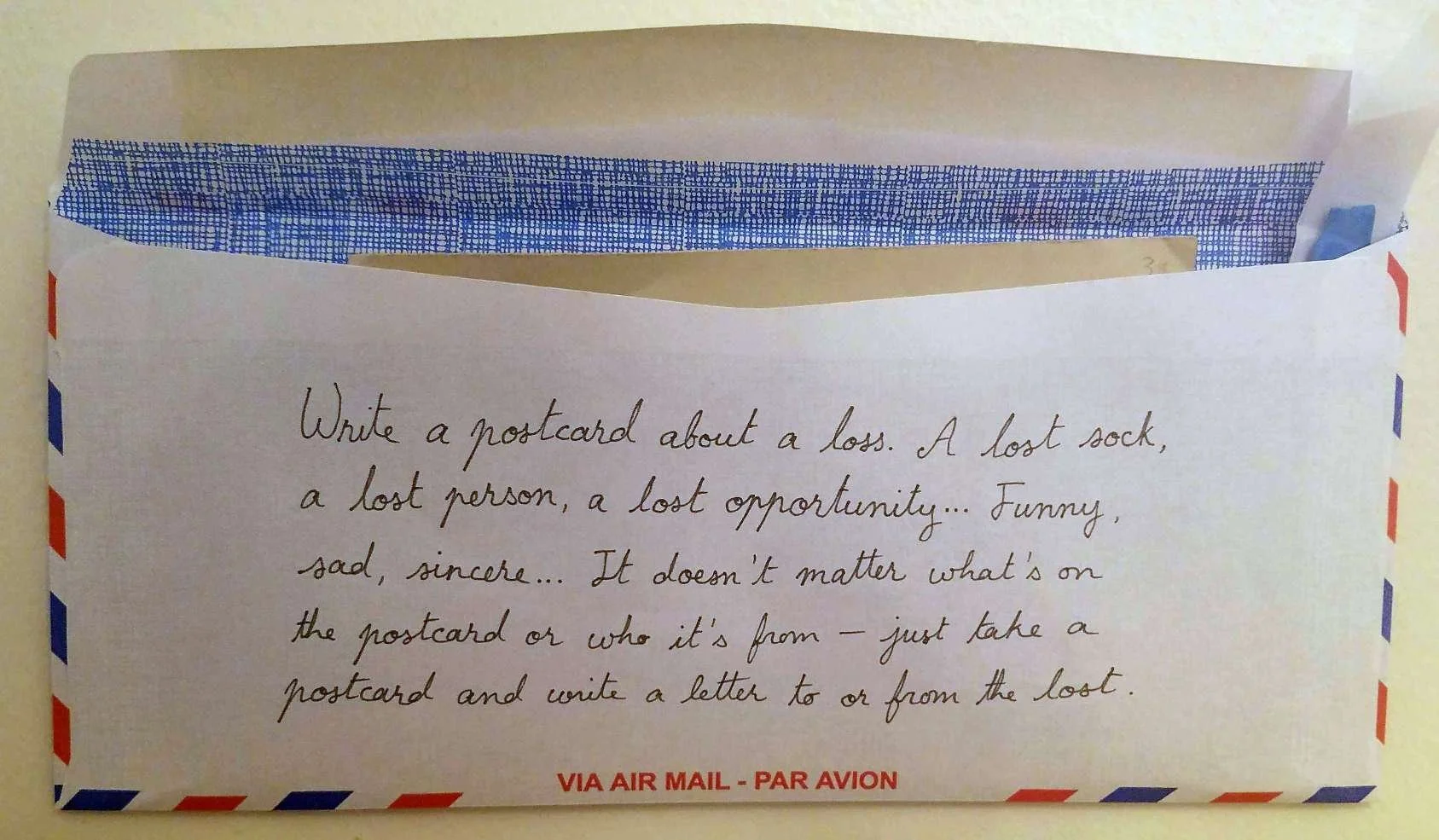
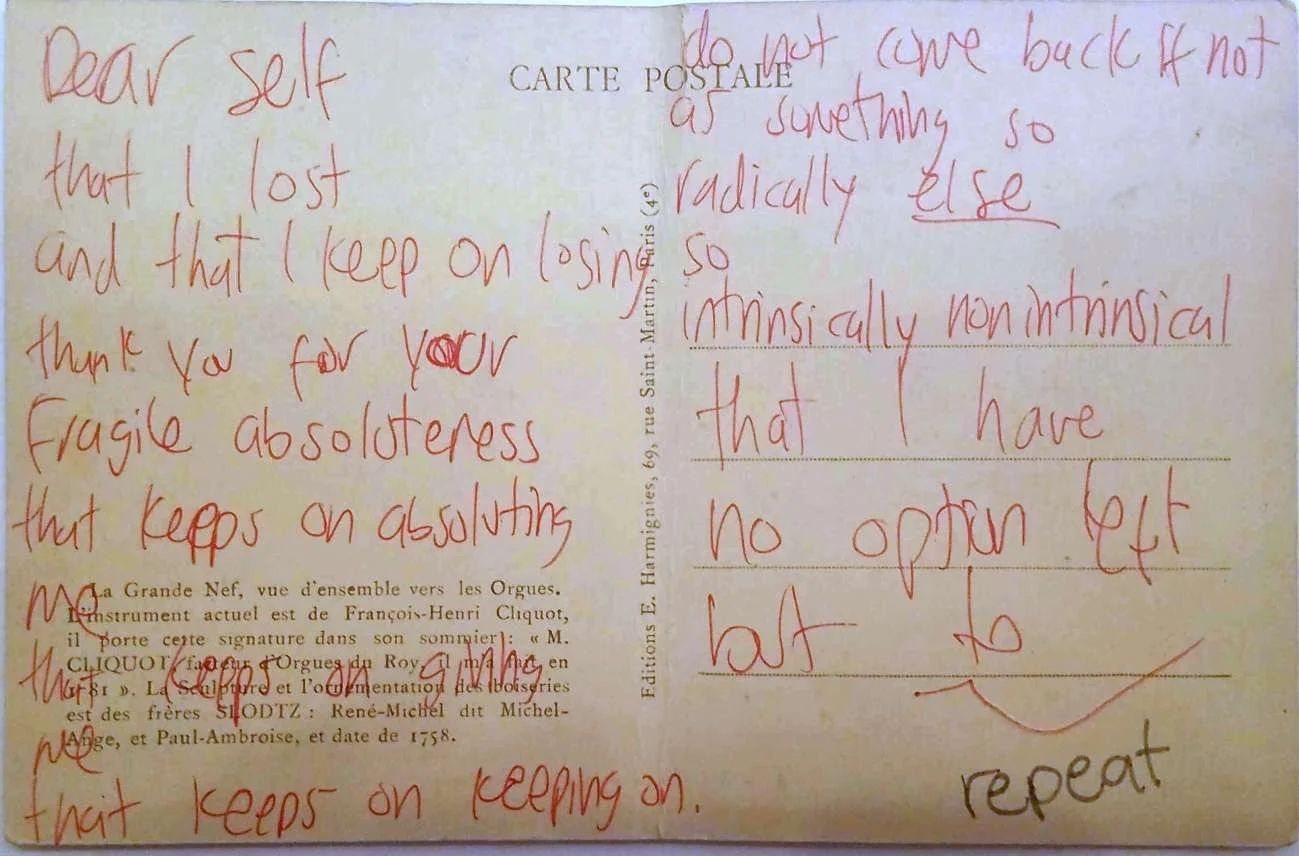
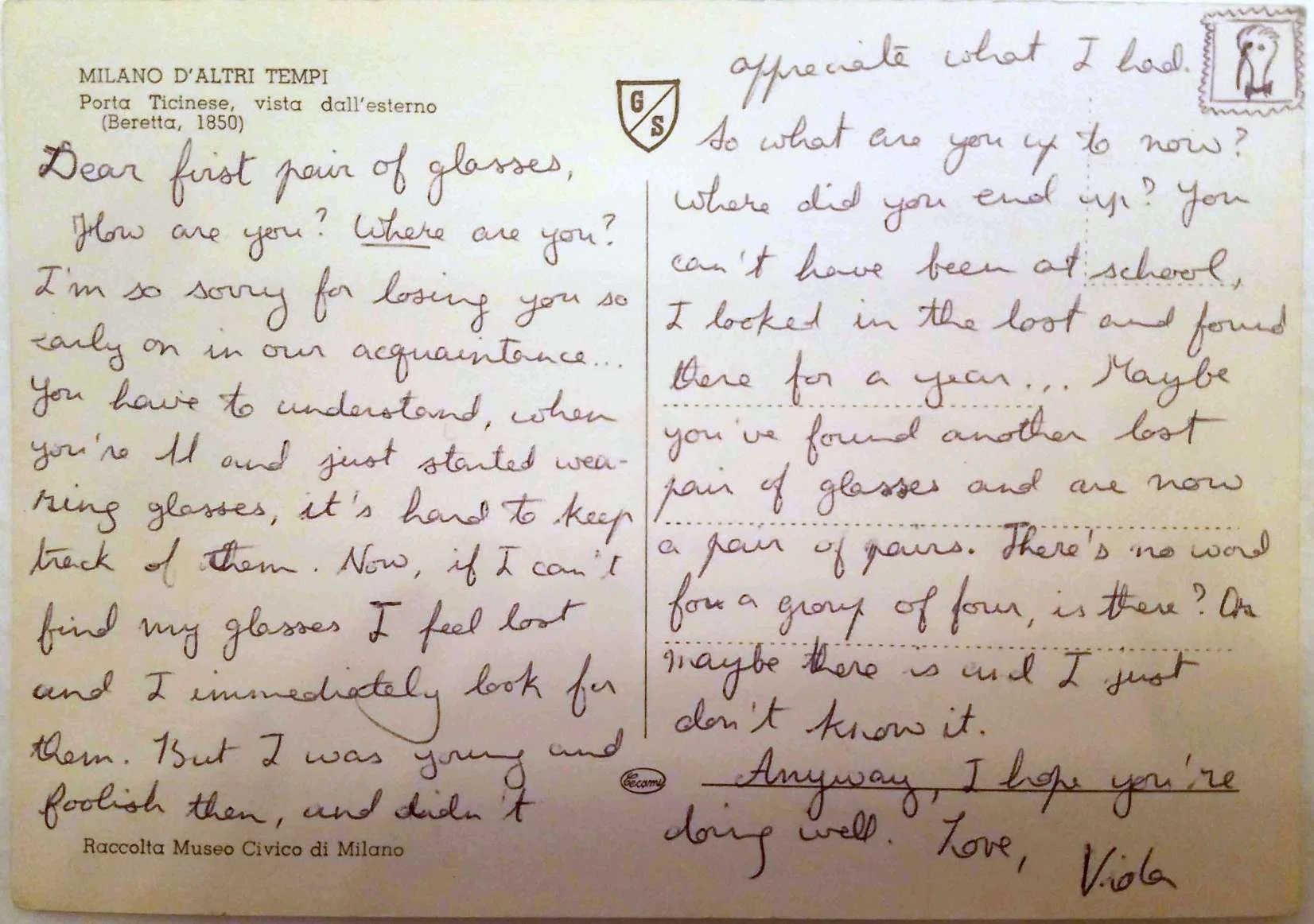
So we wrote postcards and put them on the wall, in the hopes that somehow they might reach those for whom they were meant.

Anyone who stops by B21 is welcome to write one. And if you’d like to write one but can’t come to B21 in person, send us a postcard about something you’ve found, and we’ll put it up on our new “Lost and Found” wall.