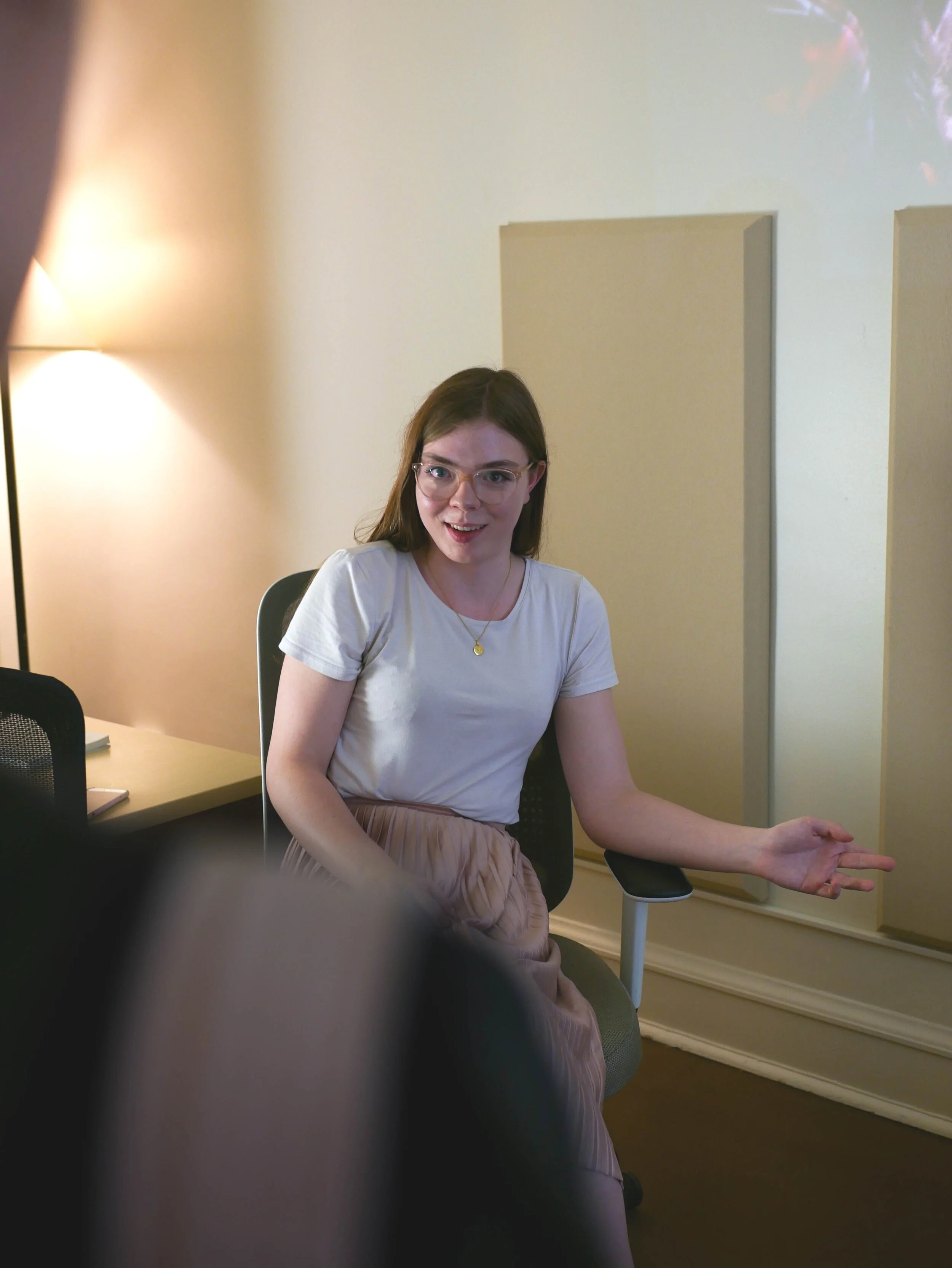

sarah hollyer-carney
I am a U2 art history student with academic interests spanning queer and feminist studies, English literature, and geography. My BLUE project looks at online transgender communities, examining trans forums, advice websites, and blogs (among others) as an archive of trans experience, thought, and desire, which very rarely find a place in traditional avenues of publishing. I was born in Toronto, grew up in Vancouver, and now live in Montreal.
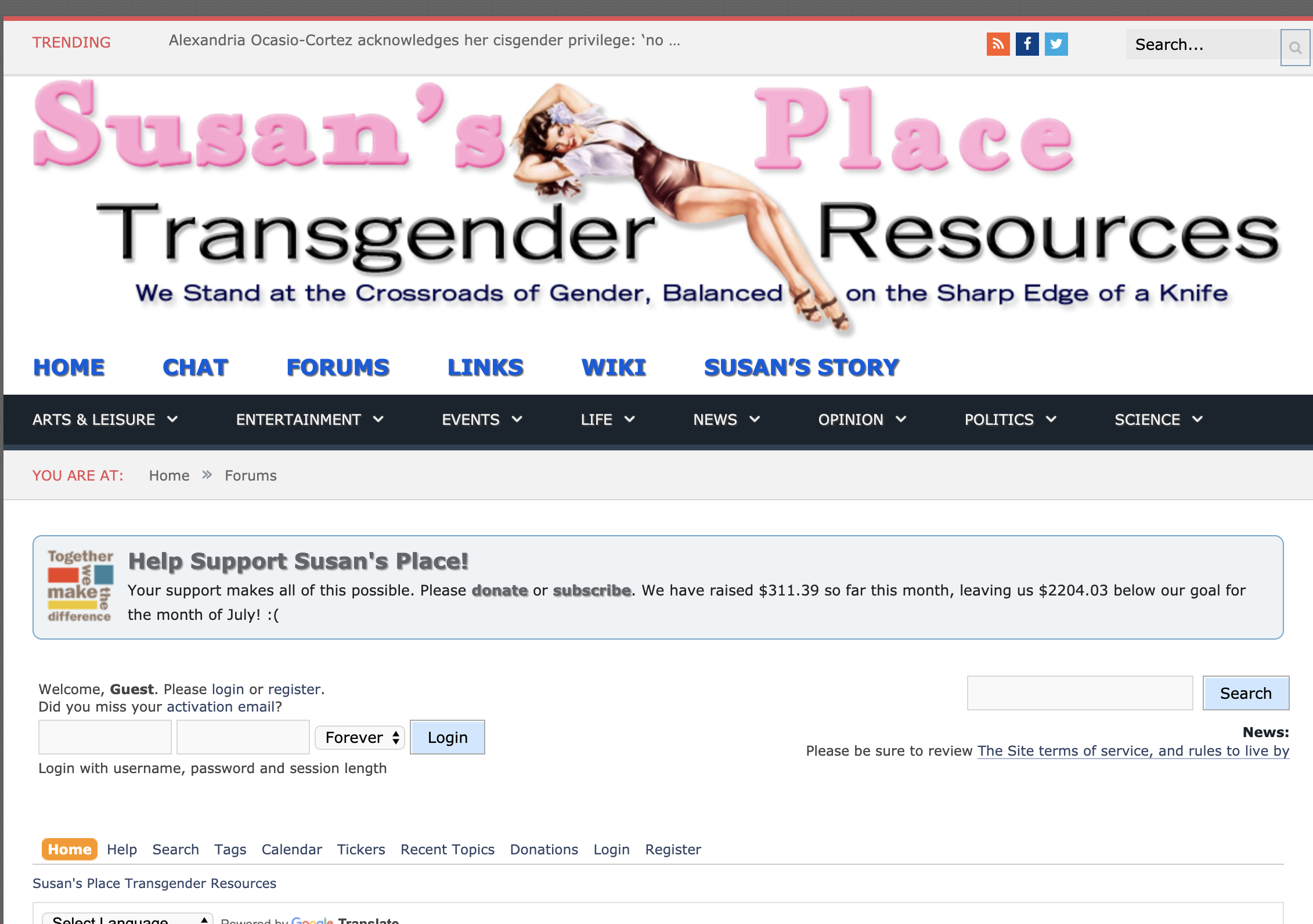
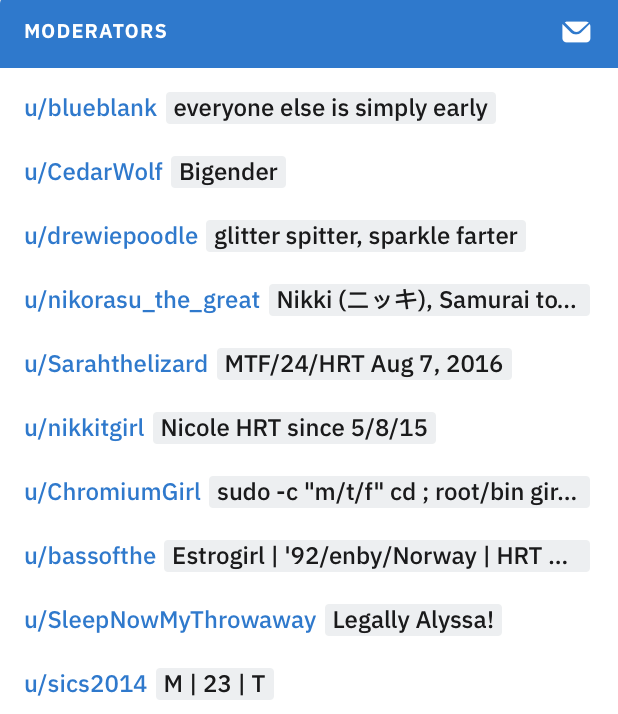
My project looks at online transgender communities — in the form of older websites like blogs and forums as well as newer communities that have formed on contemporary popular social media platforms. There are dozens of older trans forums and advice websites with thousands of posts, and I wanted to look at these as an archive of trans experiences that are rarely recorded in traditional avenues of publishing. I also wanted to trace the movement of the community (particularly for young trans people) away from these older websites towards bigger social media platforms where the, design, moderation, and audience for online activity are dominated by cisgender people. My project looks at a wide array of sources, such as forum posts, forum avatars and signatures, blogs, advice websites, web design, trans celebrities’ Instagrams, Tumblr posts, trans Youtubers, as well as texts from traditional mediums like literature and visual art.
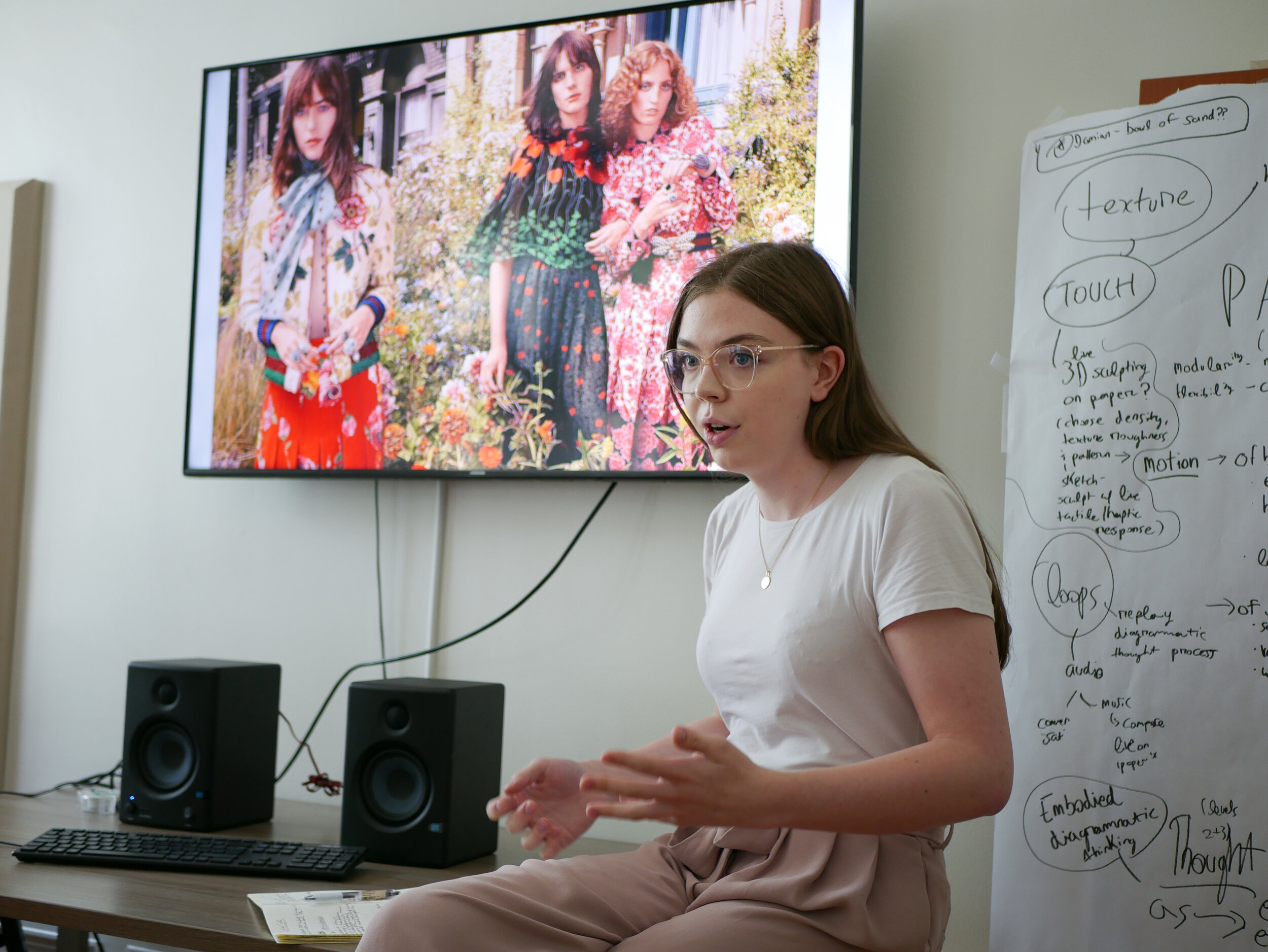
For my project at Building21, I wanted to investigate something that rarely finds a place in traditional academic settings. These informal and vernacular modes of communication and community building serve as extremely rich texts, but lack the kind of institutionally validated structure that is typically held as a prerequisite for complex analysis. My project was also motivated by a sense of urgency, in that many of these older websites are at a risk of dying out. Most support themselves on community donations, but this is proving to be an unsustainable model. The dying out of any of these websites causes us to lose access to the desires, thoughts, and feelings of countless trans people, who have usually found themselves silenced at every turn. I determined that attempting to archive these websites myself was outside of the scope of my project, but it is my hope that I was able to celebrate and raise up these voices by bringing them into the institutional spaces from which they are so often excluded.
In investigating the shift of online activity towards large social media platforms, I came to several conclusions. I found my skepticism of the dominant modes of trans representation on platforms like Instagram to be well-founded. In order for trans people to find themselves validated by these platforms, they typically must be highly invested in normalcy, assimilation into cisgender society, and the erasure of any distinctively trans characteristics. I also concluded that dominant cultural narratives of visibility and pride do not serve trans people well. Visibility does not seem to me to be a worthy goal if it is not accompanied by acceptance — we live in a time of trans hyper-visibility that has allowed the rise of a more cohesive and widespread transphobia. Further, I see pride as a political goal that has been co-opted by corporate interests to the point where it has become meaningless, instead being folded in to support the interests of corporate entities which serve to maintain the oppression of trans people.
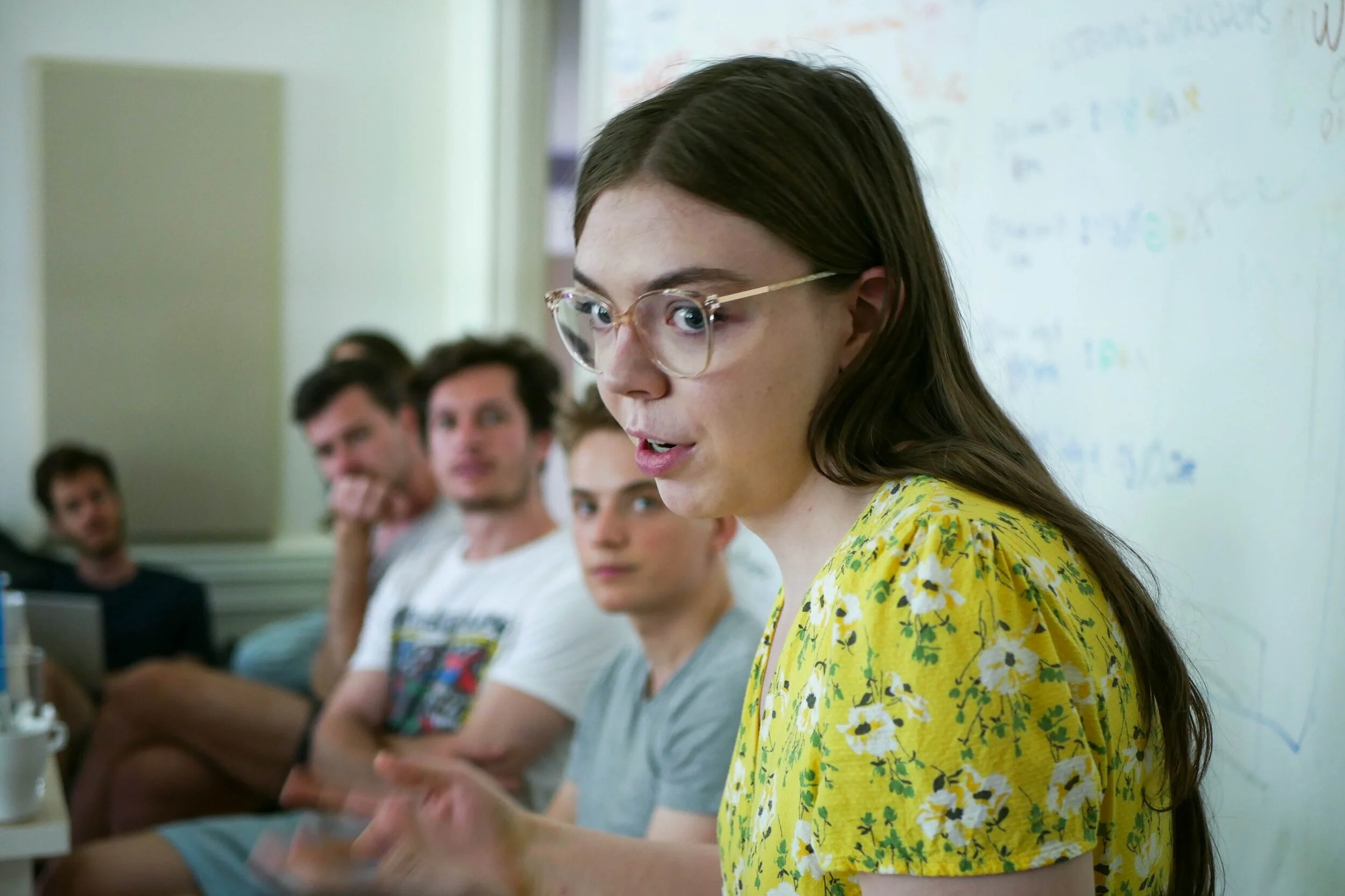
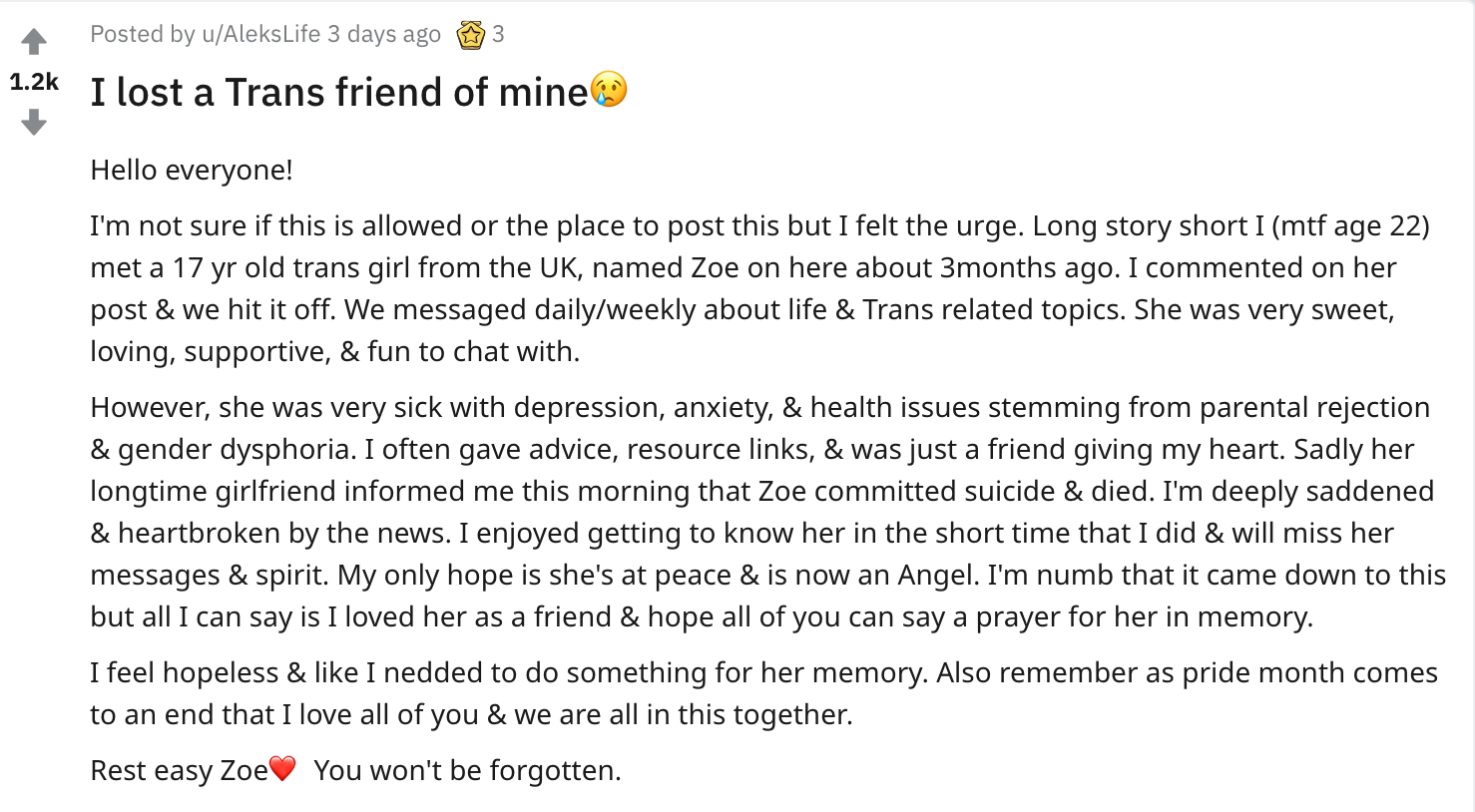
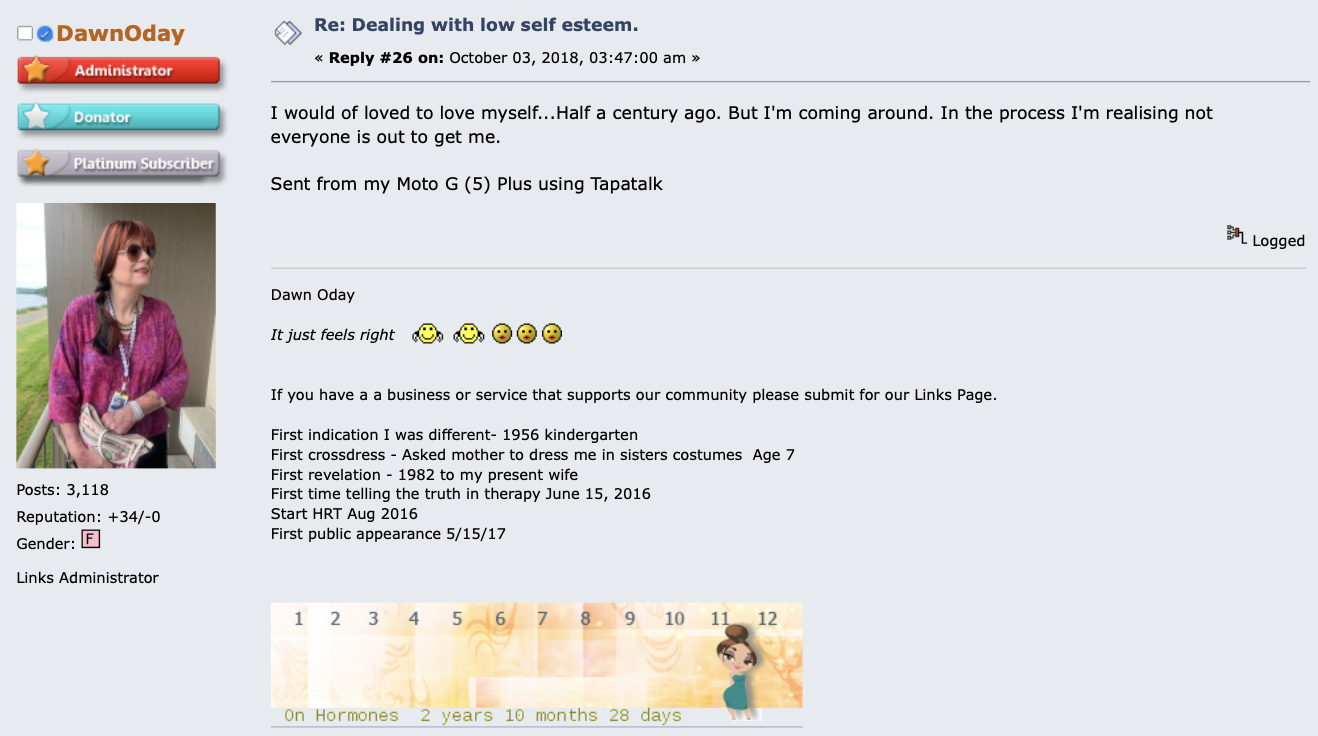
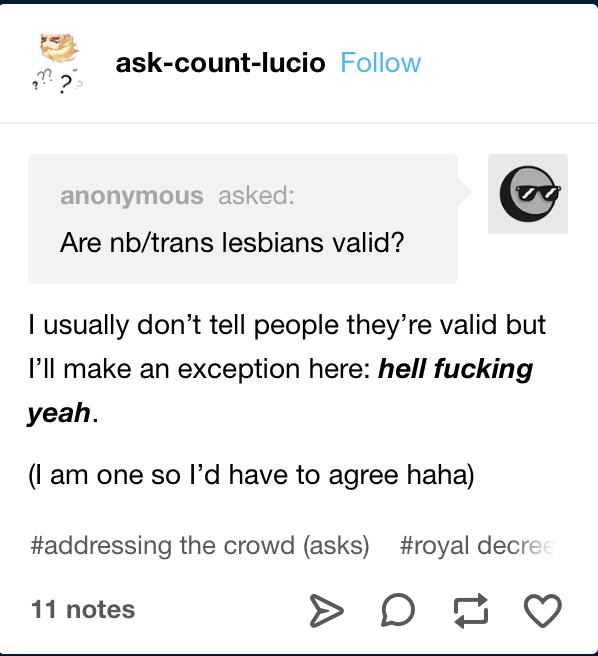
In my study of older online forms such as blogs and forums, I found a space where trans people are able to express their thoughts, feelings, and concerns, without worry over the reactions of cisgender people. These forums give a voice to trans people who are not young, white, wealthy, and cis-passing as one must be to be heard on large social media platforms. They facilitate intergenerational communication, where older trans people can share their experience of years of transphobia with young trans people who are struggling to adjust to a hostile world.
My project drew heavily on my personal experience, and I found my conclusions were quite personal as well. In the end, I found myself returning to the danger of trying to be what others want us to be. For trans people, the desire to be accepted by a broader cis public leads to hiding, apologizing, and not taking up space. In many cases, this desire leads to the internalization of cis people’s fears and prejudices, a process that can only lead to self-loathing. At the end of the day, the only way forward is to love yourself, even when the world doesn’t.
